Back in January of 2012, the hacker group Anonymous called for an internet blackout to protest the Stop Online Piracy Act and Protect IP Act. An internet blackout is when websites either show support or block usage and spread awareness.
 | ||
|
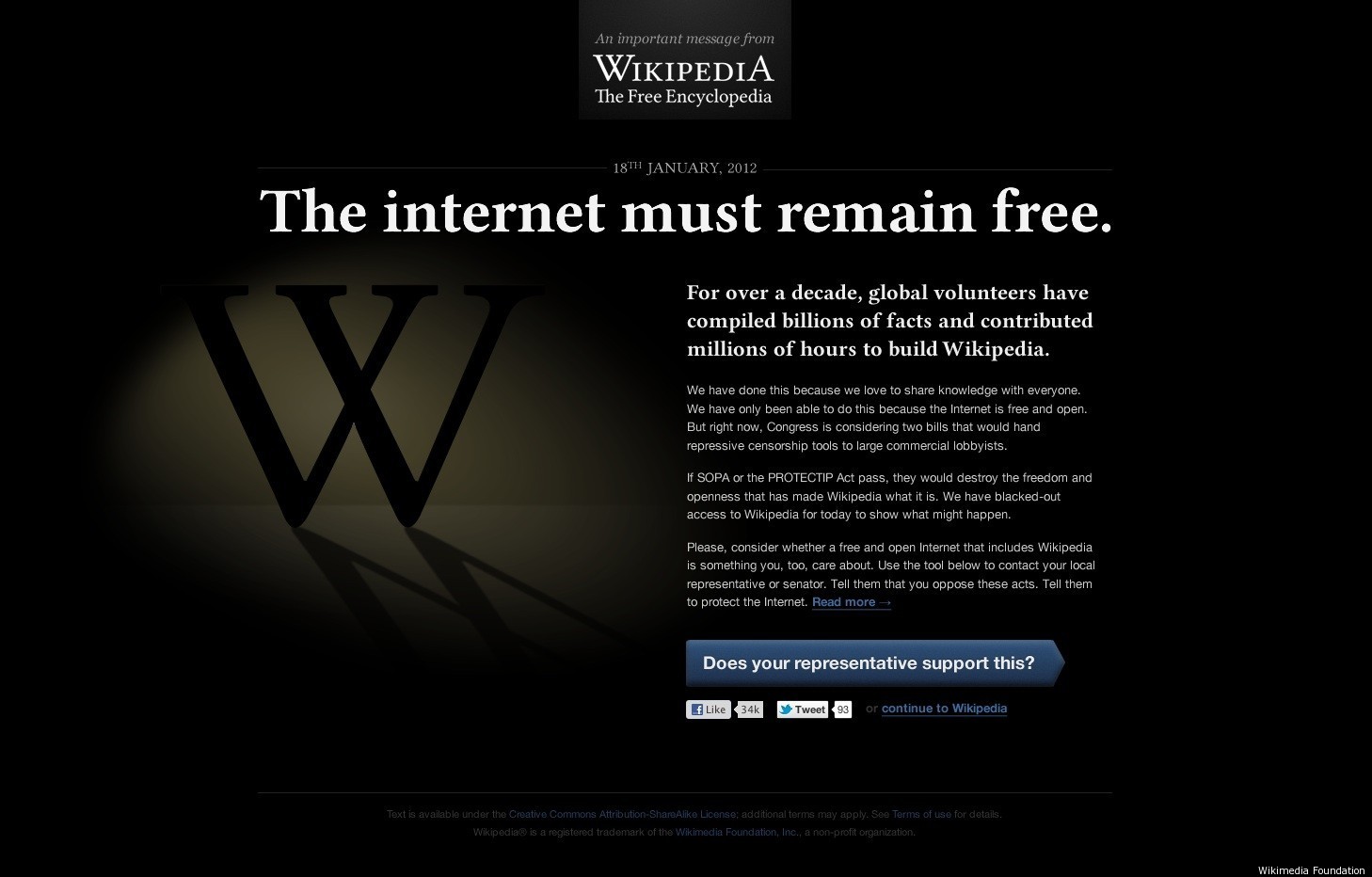
On January 18th, 2012, Google honored the blackout by placing a black bar over the word “Google” on its homepage. Wikipedia shut down its services altogether, providing only a message in white text to spread awareness over a darkened background.
All sites that participated in the blackout provided links for uninformed consumers to contact their government representatives. Some consumers didn't even log onto the internet, treating it like an internet boycott.
On April 22nd, 2013, Anonymous had called for another internet blackout to protest the Cyber Intelligence Sharing and Protection Act, an act that would allow internet websites to share someone’s information without his permission. Unlike the last blackout, companies like Google and Wikipedia didn’t participate.
CISPA was passed by the House of Representatives five days before the blackout, but the Senate would not even vote on it.
The younger generations should be aware of the CISPA, but there’s a chance that they have no idea that this is happening. The news about these internet bills rarely reaches television, and the battle is entirely online.
Twitter is one of the few places where the CISPA protests exploded with the hashtag #CISPABlackout, and thousands of informed internet users signed petitions and blacked out their websites or blogs.
An informal survey taken at Sterling High School reveals just how much students know about the CISPA and Anonymous.
Of the thirteen students interviewed, only three heard of the CISPA. Two actually knew what it was, though more students were aware of last year’s SOPA/PIPA blackout.
 |
The collective hacker group Anonymous called
for another internet blackout to protest the CISPA.
(Credit: twitter.com)
|
When asked about the hacker group Anonymous, a majority of students either didn’t have an opinion or had no idea what it was. Russel Conrad, a more informed student, had this to say about Anonymous: “They do good.”
The uninformed students were told what the CISPA was and asked their opinions on the matter. A majority of students said that it’s a “violation of privacy” or say they just “don’t like it.” Natasha Wolfhope calls it a “violation of Constitutional rights” and that it “violates privacy.”
“It’s not fair,” says Ashley Morris, a senior who rarely uses the internet.
Jasmine Campi calls the CISPA “Pure evil,” but not all students reacted negatively to the CISPA. Kellyn Lowden says “Well, I’m putting it out there. It’s there for people to take, I guess.”
Nearly all students use the internet in their daily lives, and most of them use Facebook, which explains why they may not have heard of it since the blackout took place on Twitter and parts of Tumblr.

No comments:
Post a Comment